
With a focus on halting or slowing neurodegenerative diseases, NRG Therapeutics is advancing a pipeline of first-in-class orally bioavailable and CNS-penetrant next-generation mitochondrial permeability transition pore (mPTP) inhibitors with a novel mechanism of action.
Our proprietary inhibitors are potent and selective against an undisclosed protein ("protein A"), an essential modulator of the mPTP, and have been shown to be neuroprotective and anti-inflammatory in in vivo preclinical models of ALS/MND and Parkinson’s.
ALS/MND is our lead indication but we are committed to developing our mPTP inhibitors for Parkinson’s and potentially other neurodegenerative disorders.
Our pipeline includes structurally-differentiated chemical series and provides the potential for delivering multiple differentiated clinical assets for ALS/MND and Parkinson’s.
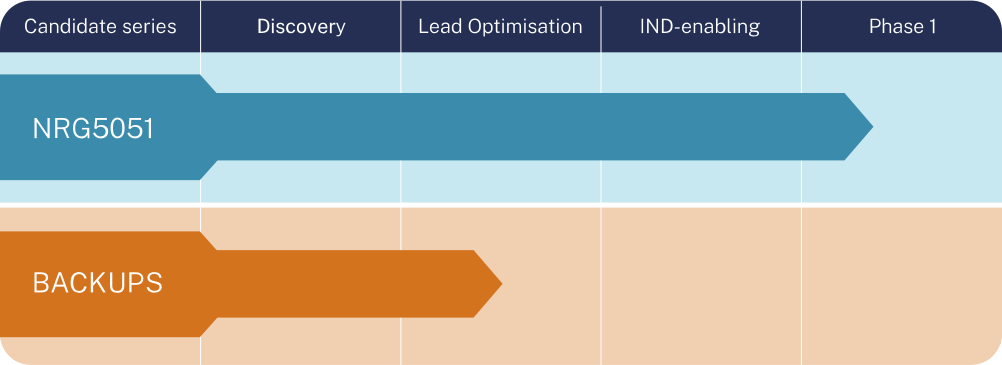
Our lead drug candidate NRG5051, a first-in-class, oral inhibitor of the mPTP, commenced a first-in-human clinical trial in 2026.
Learn more about our ongoing NRG5051-101 clinical trial – Research into the safety of a new agent (NRG5051) in healthy adults and patients with Parkinson's disease or ALS, EUCT number: 2025-523872-22-00, https://euclinicaltrials.eu/search-for-clinical-trials/?lang=en&EUCT=2025-523872-22-00
We plan to progress NRG5051 through a Phase 2 clinical proof-of-concept trials studies in ALS/MND whilst while also generating meaningful clinical data in Parkinson’s patients.
NRG5051 has the potential to be the first disease-modifying therapeutic for sporadic ALS/MND and for Parkinson’s.
Biomarkers
We are developing a biomarker strategy to support clinical development of NRG5051 and potentially the stratification of ALS/MND and Parkinson’s patients.
We will evaluate the neuroprotective benefit of NRG5051 in ALS/MND patients by measuring a reduction in the clinically validated biomarker, neurofilament light (NfL) chain. We are also developing novel imaging (e.g. positron emission tomography) methods to assess target engagement and fluid biomarkers to assess mitochondrial function and activation of the innate immune system.
Clinical strategy and partnering
Our goal is to progress our novel drug candidates through proof-of-concept clinical trials for late-stage development and commercialization by global pharma partners.
NRG5051 is undergoing clinical trials to evaluate the safety and effectiveness in humans. It has not received marketing authorization or approval by any regulatory agency, including the US Food and Drug Administration and the European Medicines Agency.

